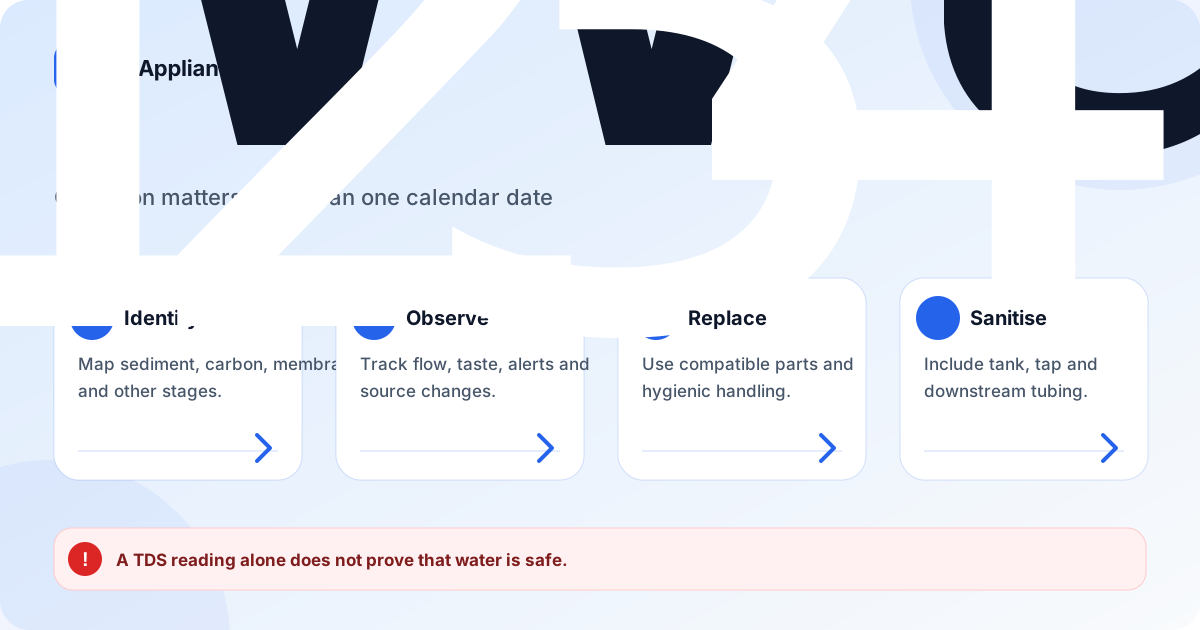
Water Purifier Filter Replacement: Timing, Signs and Safe Service
Water-purifier filters do different jobs: some trap sediment, some reduce chlorine and odour, and an RO membrane separates dissolved material under pressure. Their useful life depends on incoming water quality, household consumption, pressure, storage conditions and the exact model. Replacing every cartridge on a fixed sales schedule can waste money, while delaying a saturated filter can reduce flow or treatment performance. A good service decision combines the manufacturer schedule with observed performance and appropriate water testing.
Key takeaways
- Identify each filter and its role before replacing it.
- Use model-compatible parts and hygienic service procedures.
- Unexpected taste or contamination concerns need source-water investigation too.
Map the purifier stages and manual schedule
Find the model number and diagram showing sediment, carbon, membrane, post-carbon, UV or mineral stages. These components are not interchangeable and do not share one service interval. The manual may specify time, volume or indicator-based replacement and may set conditions that shorten the interval.
Record installation and replacement dates, part numbers and measured readings. A sticker with only a future sales date is not enough. Keeping a history reveals whether a sediment filter blocks unusually quickly or a membrane life is shorter than expected, which may point to poor pretreatment or changing source water.
Watch flow, taste, odour and alerts
Slow production, a filter alarm, frequent pump operation, leakage or a sudden taste change can indicate service, but each symptom has multiple causes. Low inlet pressure or a closed valve can reduce flow; a storage-tank issue can mimic a blocked filter. Resetting an alarm without replacing or checking the component removes the reminder but not the condition.
Do not rely on taste alone to judge water safety. Some contaminants have no taste or smell, and an unusual taste can come from source water, stagnation, a new cartridge or dirty storage components. Use appropriate testing and public-water guidance when safety is in doubt.
Understand TDS readings correctly
A TDS meter estimates dissolved ionic material; it does not test microorganisms, pesticides or every harmful substance. A low number is not a complete certificate of safety. Compare feed and product readings only when the purifier design and source make TDS relevant.
Very large changes can help indicate membrane performance or a bypass issue, but temperature and meter quality affect readings. Ask the technician to explain what is being measured and why. Do not adjust blending valves only to chase an internet number without considering the manufacturer design and local water advice.
Use compatible parts and hygienic handling
Replacement cartridges must fit the housing, pressure rating and treatment specification. A part that physically fits may use different media or seals. Verify packaging, part number and source. Ask for removed parts to be shown and for the invoice to list each new component.
Service should prevent contamination: clean hands or gloves, protected tubing ends, sanitised tools and proper flushing matter. O-rings need inspection and correct seating. Excess lubricant, damaged threads or overtightened housings can create leaks. Internal electrical UV components require power isolation.
Clean and sanitise storage components
Changing a filter does not automatically clean the storage tank, tap and downstream tubing. Follow the manufacturer's sanitation process and interval. Stagnant water after a long absence may require flushing and service before use.
Do not pour household bleach or cleaning chemicals into the purifier unless the exact approved concentration and procedure are provided by the manufacturer. Incorrect chemicals can damage the membrane, seals and taste and may leave unsafe residue.
Investigate unusually short filter life
A sediment filter that blocks rapidly may indicate high turbidity, pipe work, tank contamination or a change in municipal supply. A carbon filter exposed to higher chlorine or organic load may also exhaust faster. Addressing the incoming-water condition can protect later stages.
If filters repeatedly fail early, request source and pressure checks rather than simply increasing replacement frequency. The correct purifier configuration may need reassessment. Water treatment should be based on tested source conditions and local requirements, not a one-size-fits-all sales package.
Frequently asked questions
How many months does an RO filter last?
There is no universal interval. Feed water, use, pressure, filter size and model guidance determine life. Follow the manual and measured performance.
Does low TDS mean the water is completely safe?
No. TDS does not measure every chemical or microorganism. Water safety may require different tests based on the source and local guidance.
Can I replace only the sediment filter?
Replace only what condition and the service schedule justify, but confirm that other stages remain within specification. Each stage has a different purpose.
Why does water taste different after filter replacement?
New media may require flushing, or sanitation and source-water factors may be involved. Follow the prescribed flush volume and stop use if the taste remains abnormal.