How to Reduce AC Electricity Use Without Sacrificing Comfort
Air-conditioner electricity use depends on weather, room heat gain, set temperature, equipment efficiency, maintenance and the number of hours the compressor runs. There is no single setting that guarantees a particular saving for every home. The useful goal is to reduce unnecessary heat entering the room and help the system transfer heat efficiently. This guide focuses on changes you can measure without compromising safety or comfort. Compare bills only across similar weather and usage periods, because a hotter month can increase consumption even when habits have not changed.
Key takeaways
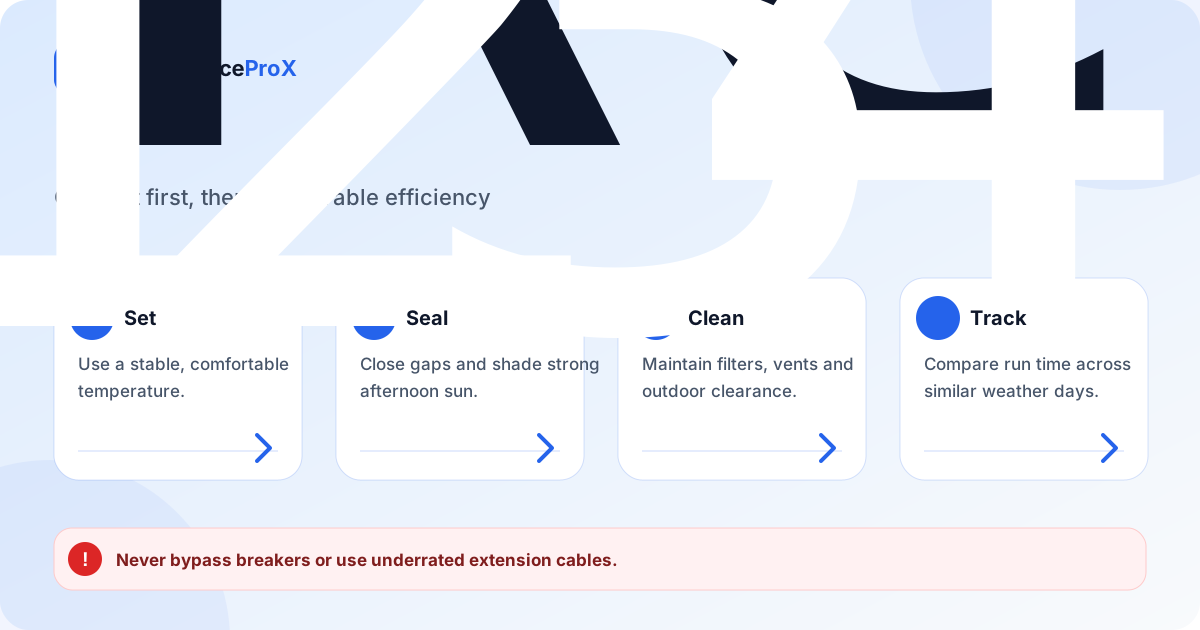
- Choose a stable, comfortable temperature instead of extreme settings.
- Reduce heat gain and keep airflow paths clean.
- Track operating hours and warning signs before blaming the meter.
Set a realistic temperature and fan strategy
Selecting the lowest possible temperature does not make a conventional AC cool the room instantly. It makes the compressor run until the lower target is reached, which may never happen in a hot or poorly insulated room. Start with a comfortable setting and adjust gradually. A ceiling fan can improve perceived comfort by moving air, allowing some households to use a slightly higher AC setting.
Use the fan only when people are in the room because a ceiling fan cools occupants, not the air itself. Avoid changing the set point every few minutes. Stable operation is often more comfortable, and inverter systems can reduce output after approaching the target. Sleep schedules and timers can limit unnecessary operation, but ensure pets, older adults and people with health conditions remain comfortable.
Reduce heat entering the room
Close doors and windows and seal obvious gaps around frames. Use curtains, blinds or exterior shading on windows that receive strong sun, particularly during afternoon hours. Turn off unnecessary lights and heat-producing equipment. Cooking, ironing and multiple computers can add a surprising amount of heat, so ventilation and timing make a difference.
Insulation, reflective roof treatment and shaded outdoor walls can reduce long-term cooling demand, but the cost and building suitability should be assessed. In rented homes, simple removable curtains and door seals may be more practical. Do not block required ventilation for gas appliances or compromise indoor air quality in the effort to seal a room.
Keep filters, coils and vents clean
Restricted airflow makes the indoor fan and cooling system work under less favourable conditions. Inspect reusable filters every two to four weeks during heavy use, or as the manual recommends. Clean and dry them correctly. Keep furniture and curtains away from the return inlet and supply louvres so cooled air can circulate through the occupied zone.
Outdoor coils also need clear airflow to release heat. Remove loose leaves and items around the unit without opening its cover. Deep coil cleaning, blower cleaning and electrical checks should be done with suitable methods. Aggressive pressure washing can bend fins or wet components, so more force is not necessarily better maintenance.
Use timers and zones thoughtfully
Cool occupied rooms rather than leaving every unit on. Close the door to unused spaces, but do not obstruct the return path of a central system. A timer can switch the AC off after sleep begins or before the family leaves, while a programmable schedule prevents accidental all-day operation. Smart controls are useful only when configured correctly; review them after a power cut or seasonal change.
Turning a unit off for a very short interval may not save much if the room quickly reheats and the compressor must work hard again. The best schedule depends on insulation, climate and occupancy. Observe total daily run time and comfort rather than following a rigid internet rule.
Check size, efficiency and installation
An undersized AC can run continuously without reaching the target, while an oversized fixed-speed unit may cool quickly but cycle often and control humidity poorly. Capacity should consider room area, ceiling height, sun exposure, people and heat-producing appliances. A professional heat-load assessment is more reliable than using floor area alone.
Installation quality affects efficiency. Poorly insulated refrigerant lines, restricted outdoor airflow, incorrect refrigerant charge and leaking room openings can waste energy. If consumption rises suddenly along with weak cooling, ice, noise or frequent cycling, request diagnosis instead of assuming that the electricity tariff is the only cause.
Measure before and after changes
Record the meter reading or energy-monitor data, hours of AC use, set temperature and approximate weather for several days. Compare similar days after cleaning filters or changing schedules. Whole-home bills include water heaters, refrigerators, pumps and other loads, so a single high bill cannot identify the AC by itself.
Plug-in meters are not suitable for every high-power or hard-wired air conditioner. Use only correctly rated equipment installed by qualified personnel. If the meter reading seems abnormal across the entire home, ask the electricity provider or an electrician to check the supply and internal circuits rather than tampering with the meter.
Frequently asked questions
What AC temperature uses the least electricity?
A higher cooling set point generally reduces compressor work, but comfort, humidity and health matter. Choose the highest setting that remains comfortable instead of relying on one universal number.
Is it cheaper to leave an inverter AC on all day?
Not automatically. Inverter systems can operate efficiently at part load, but an empty room still gains heat and consumes energy. Scheduling should match occupancy, insulation and weather.
Does cleaning the filter really reduce the bill?
A dirty filter can restrict airflow and extend run time. Cleaning may improve performance when the filter is clogged, but it cannot correct refrigerant, sizing or building heat-gain problems.
Why did my bill rise even though the settings are unchanged?
Hotter weather, longer operating hours, dirty coils, open doors, additional household loads, tariff changes or a developing AC fault can all contribute. Compare like-for-like usage and inspect symptoms.