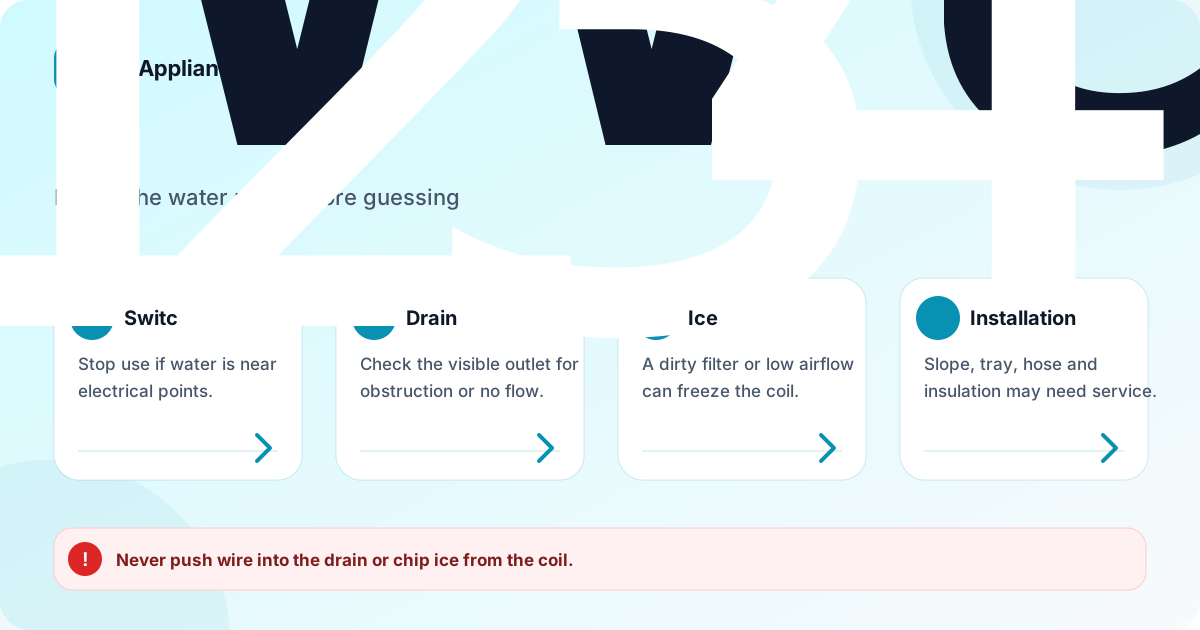
Why Is Water Dripping From Your AC? Causes and Safe Checks
Water dripping from an indoor air-conditioner unit is not something to ignore. Normal condensation should collect in the drain tray and flow outdoors through a pipe. When that route is blocked, tilted, damaged or overwhelmed by ice melting from the coil, water can enter the room and affect walls, furniture and electrical points. A homeowner can make a few external checks safely, but opening the unit or using pressure inside the drain system can cause additional damage. The pattern and timing of the leak are important clues.
Key takeaways
- Switch the unit off if water is near wiring or a socket.
- Check only accessible filters, drain outlet and visible pipe slope.
- Recurring leaks need diagnosis of drainage, icing and installation.
Understand where AC water comes from
Warm room air contains moisture. As that air passes over the cold evaporator coil, moisture condenses on the coil, falls into a drain pan and leaves through a pipe. More water is normal during humid weather. The problem begins when water does not reach the outlet or when condensation forms on surfaces that are not properly insulated.
Note whether the leak begins immediately, after several hours, only during humid weather or after the unit is switched off. An immediate drip can suggest a pan, joint or installation issue. A leak after long operation may be caused by a slow drain or ice accumulation. Water released after shutdown often comes from melting ice, so cooling performance and airflow should be checked as well.
Look for a blocked or slow drain
Dust, microbial growth and insects can obstruct the condensate pipe. From outside, look for the drain outlet and check whether water is flowing while the AC has been cooling for some time. No flow does not prove a blockage, because humidity may be low, but indoor leakage together with a dry outlet is a useful sign. Do not blow into the pipe or insert wire deeply; this can push debris inward or puncture a flexible hose.
A technician may clean the drain with suitable suction, flushing and access to the tray. The tray and outlet connection should also be inspected for cracks or loose joints. Chemical drain cleaners meant for household plumbing should not be poured into an AC because they can damage plastic, metal and indoor air quality.
- Keep the outdoor outlet free of mud and nesting material.
- Do not seal the drain end.
- Ask for tray cleaning if slime returns frequently.
Check filter condition and icing
A severely dirty filter reduces airflow and can make the evaporator coil freeze. When the ice melts, the volume of water may overflow the pan. Switch off cooling, inspect the user-removable filter and allow visible ice to melt naturally. Place protection under the unit if needed, but keep water away from sockets and extension boards.
If icing returns with a clean filter, possible causes include a dirty coil, weak fan, sensor fault, low refrigerant or a restriction. Refrigerant pipes may also sweat when insulation is damaged. These issues require inspection because simply clearing the drain will not solve the underlying cause. Mention weak cooling or ice when booking the service.
Consider installation angle and pipe routing
The indoor unit and drain tray must be positioned so water flows toward the outlet. A recently installed or relocated unit that leaks from one side may be incorrectly levelled or may have a pinched drain hose. The drain line needs a continuous downward path without upward loops that trap water. Decorative trunking can hide a poor slope, so the route may need to be opened for inspection.
Do not attempt to pull or tilt a wall-mounted unit. Mounting brackets, electrical connections and refrigerant tubing can be damaged, and the unit may be heavy. Ask the installer to verify level, drain slope, joints and insulation. Photograph the leak location and pipe route before the visit if it can be done safely.
Distinguish condensation from a plumbing leak
Water near an AC is not always produced by the appliance. A concealed water pipe, rain entry, wall seepage or drain from another unit can create a similar stain. Observe whether the moisture appears only when your air conditioner runs. Colour, odour and the position of the stain may also help, but avoid contact if the water could be contaminated.
In multi-storey buildings, a neighbour's condensate line can sometimes discharge onto an exterior wall or into a shared shaft. If the indoor unit and its drain are dry, building maintenance may need to inspect the wall and common drainage. Separating the source prevents unnecessary appliance repairs.
Prevent repeat leakage
Clean accessible filters regularly during heavy use and keep the outdoor drain outlet unobstructed. Arrange service when airflow declines, the unit smells musty, or drainage becomes slow. In humid areas, periodic cleaning of the tray and line may be necessary, but the schedule should reflect actual condition rather than an automatic replacement package.
After repair, run the AC long enough to verify drainage under realistic conditions. Confirm that water exits at the correct point and no pipe surface is sweating indoors. Ask what caused the leak and what was cleaned, adjusted or replaced. A documented cause is more useful than a temporary wipe-up.
Frequently asked questions
Can I keep using an AC that drips a little water?
It is better to switch it off and identify the cause. Even a small leak can damage paint, furniture, electronics or hidden wiring, and it may indicate icing or a blocked drain.
Why does the AC leak only at night?
Longer continuous operation, higher humidity, lower fan speed or colder settings can make a slow drain or icing problem more noticeable after several hours.
Is water from the AC drain safe to drink or reuse?
Do not drink it. Condensate can collect dust and microorganisms from the coil and tray. If reused for non-contact purposes, handle it cautiously and follow local hygiene guidance.
Will filter cleaning stop every AC leak?
No. It helps only when poor airflow and icing are involved. Blocked drains, cracked pans, loose joints, damaged insulation and incorrect installation require different repairs.