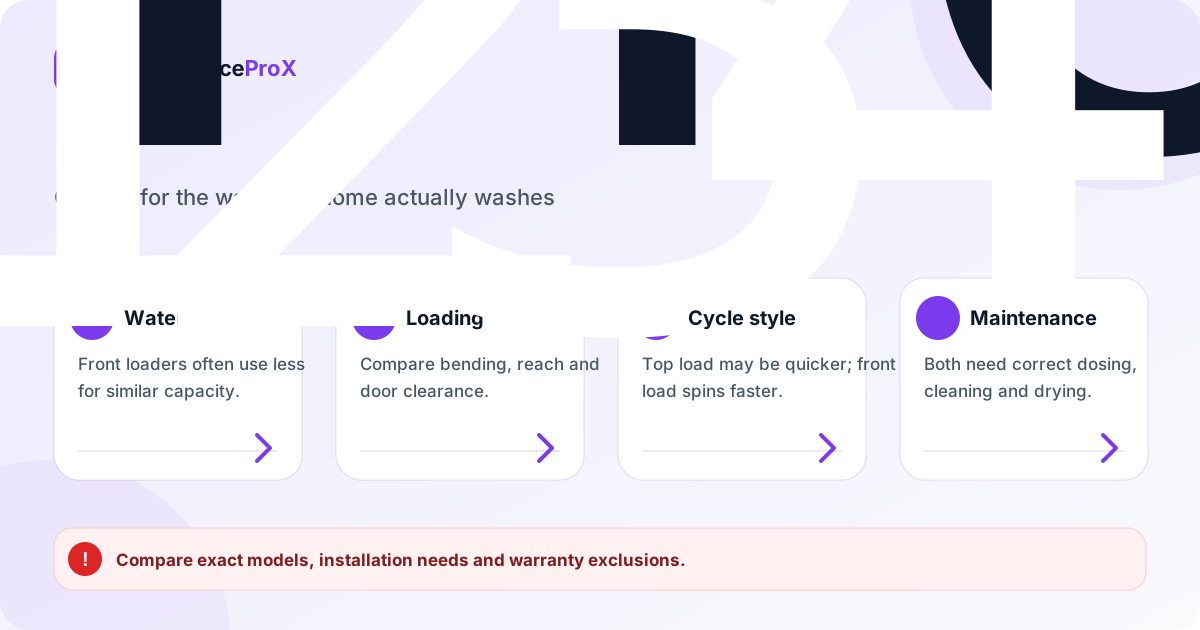
Front Load vs Top Load Washing Machine: A Practical Comparison
Front-load and top-load washing machines can both clean everyday laundry well, but they differ in drum movement, water use, cycle behaviour, loading height and maintenance habits. The better choice depends on household size, water pressure, available space, fabric mix and how comfortably users can bend or reach. Marketing labels and one efficiency number do not tell the whole story. This comparison focuses on practical ownership: what the machine needs, how it fits into the home and which routine tasks users must be willing to perform.
Key takeaways
- Choose for your water supply, space and laundry habits.
- Consider loading comfort and cycle duration, not only purchase price.
- Both designs need correct detergent and regular cleaning.
How the washing actions differ
A front-loader rotates a horizontal drum and lifts clothes before dropping them through a shallow pool of water. This tumbling action can clean efficiently with less water, but cycles are often longer. A top-loader uses a vertical basket with an impeller or central agitator, depending on the model. It may fill more deeply and complete some cycles faster.
Cleaning performance varies by program, load, detergent and machine design, so the door position alone does not determine results. Agitator models can move laundry strongly but may be less gentle on some fabrics. Impeller models provide more open basket space but require correct loading so clothes circulate rather than forming a tight bundle.
Water and electricity considerations
Front-load machines usually use less water for comparable capacity because the drum does not need to fill completely. Lower water use can also reduce the energy needed for heated cycles. However, an efficient label is based on standard test conditions. Household results depend on program choice, temperature, extra rinses, load size and local water pressure.
A top-loader may be a reasonable choice where quick cold-water cycles and easy loading matter more than minimum water consumption. Compare the official energy label for specific models rather than assuming every front-loader is efficient and every top-loader is wasteful. Also consider the energy and water used if frequent re-washing is caused by overloading or the wrong program.
Loading comfort and available space
Top-load machines are convenient for people who prefer not to bend deeply, but the bottom of a tall drum can be difficult for shorter users to reach. Front-loaders require clear space in front for the door and comfortable bending unless placed on a manufacturer-approved pedestal. Their flat top may provide a work surface, but it should not be overloaded or block ventilation.
Measure the installation route, door opening, machine depth, hose clearance and service access—not only the cabinet width. Front doors can project significantly when open. A top lid needs vertical clearance below shelves. Leave the gaps specified in the manual to reduce vibration and allow hoses to sit without sharp bends.
Cycle time, adding clothes and drying
Many top-load cycles finish sooner, while front-load programs may use longer controlled tumbling to achieve cleaning with less water. Some modern machines in both categories provide quick cycles, but these are intended for smaller or lightly soiled loads. Compare full program tables instead of the shortest advertised cycle.
Top-loaders often allow easier addition of a forgotten item after filling, although lid locks and program rules vary. Some front-loaders provide an add-item pause or secondary door. Front-load drums commonly reach higher spin speeds, which can remove more water and shorten line or dryer time, but high speed may increase creasing or vibration if the load is unbalanced.
Cleaning and odour prevention
Front-load door gaskets can retain moisture, lint and small items. Wipe the gasket, remove debris and leave the door slightly open between washes when safe for children and pets. Use the correct low-foaming detergent quantity and run the recommended drum-clean cycle. Excess detergent leaves residue and does not improve cleaning.
Top-loaders also accumulate detergent, fabric softener and lint under dispensers or around the basket. They need periodic cleaning and an open lid for drying where safe. No design is maintenance-free. Hard water, frequent cool washes and overdosing detergent can increase deposits in either type.
Repair access, price and long-term value
Initial price varies widely. A front-loader may cost more but save water; a basic top-loader may be simpler for a household with limited programs. Long-term value includes energy, water, detergent, expected use, warranty, local service availability and the price of major parts such as a control board, bearing assembly or motor.
Ask whether the entire tub must be replaced for a bearing fault and what the standard warranty actually covers. A long motor warranty may exclude labour and other expensive components. Choose a capacity you can load correctly; buying an oversized machine that is routinely underfilled may not provide the expected value.
Frequently asked questions
Which type cleans clothes better?
Both can clean effectively when the model, program, load and detergent are appropriate. Compare independent model information and features rather than relying only on the loading direction.
Which is better for an older person?
A top-loader can reduce bending, but drum depth may be difficult to reach. A raised front-loader may help if the pedestal is approved and stable. The user should try the loading position before purchase.
Do front-load machines always smell?
No. Odour is usually linked to retained moisture, residue and poor ventilation. Correct detergent dosing, gasket cleaning and drying the machine between uses greatly reduce the risk.
Can a washing machine be installed in a bathroom?
Only if the manufacturer permits the location and safe water, drainage, ventilation and electrical protection are provided. Avoid splash zones and use a qualified electrician for the supply.