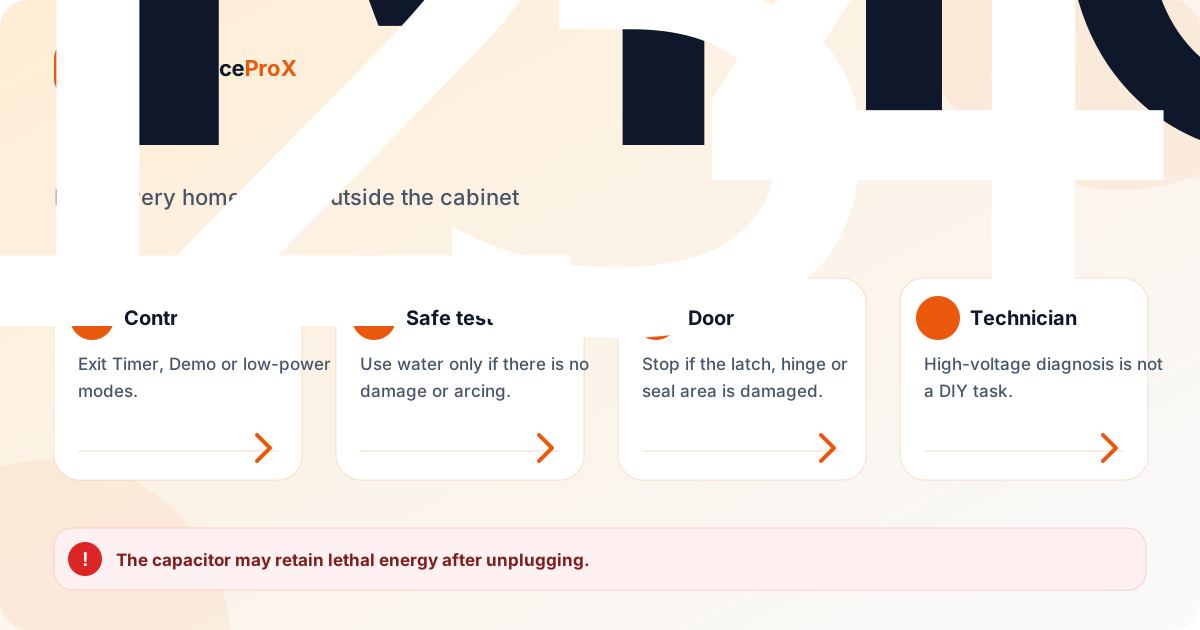
Microwave Running but Not Heating? Safe Diagnosis and Next Steps
A microwave can light up, run its fan and turn the plate while food remains cold. Sometimes the cause is a control setting, unsuitable test or incomplete door closure. Internal causes include door switches, high-voltage components, control circuits and the magnetron. These are not safe do-it-yourself repairs. A microwave may retain dangerous electrical energy after it is unplugged, and damaged shielding or door alignment can create additional risk. Home checks should remain external and should stop immediately if there are sparks, smoke, burning smell or door damage.
Key takeaways
- Verify settings and use a safe cup-of-water test only if the unit is otherwise normal.
- Never remove the microwave cover.
- Door damage, arcing and burning smells require immediate shutdown.
Confirm the program and power level
Check that the microwave is not in Timer, Demo, Eco or defrost-only mode. Set a normal heating power and short time according to the manual. A reduced power program cycles heating on and off, so a brief test may feel inconsistent. Clear the program and re-enter it rather than pressing several buttons rapidly.
If the display recently reset after a power cut, the clock or child lock may need attention. Some models will run demonstrations without energising the heating system. Consult the exact manual because indicator names vary. Do not use an empty oven as a test.
Use an appropriate heating test
If there is no damage, smell or sparking, place a microwave-safe cup with a measured amount of room-temperature water inside and heat it for the manual's recommended short test period. Water should become noticeably warmer. Do not overheat it, and handle the cup carefully because liquid can become hotter than it appears.
One food item can mislead diagnosis. Frozen food, dense portions, low power and uneven placement affect results. The controlled water test helps confirm whether heating energy is being produced. Stop if abnormal noise or arcing occurs.
Inspect door closure from the outside
Food residue or a misaligned container can prevent complete door closure. Clean the contact surfaces gently and check that the latch engages normally. Do not operate a microwave with a bent door, cracked hinge, damaged seal area or broken latch. The door and interlock system are safety components, not ordinary cabinet hardware.
If operation changes when the door is lifted, pressed or moved, stop using the unit. Multiple interlock switches and their mounting may need adjustment or replacement. Never tape a switch or bypass a latch to make the oven run.
Consider supply and ventilation conditions
Use the required wall outlet and avoid underrated extension boards. Low supply voltage, loose connections or overheating plugs can affect performance and create risk. If the plug, socket or cable becomes hot or discoloured, disconnect it from a safe position and arrange electrical inspection.
Keep the ventilation openings clear. Overheating can trigger protective devices and shorten component life. Built-in models need the specified cabinet kit and clearances. Do not place objects on vents or push a countertop unit tightly against a wall.
Understand common internal faults
A failed high-voltage diode, capacitor, transformer or magnetron can result in no heat, buzzing or repeated fuse failure. Door-switch and control faults can also interrupt the heating circuit. These parts operate at dangerous voltage, and a capacitor may retain a charge when the plug is removed.
Diagnosis requires correct discharge procedures, interlock testing, leakage checks after repair and model-specific parts. Internet instructions that suggest replacing a fuse without finding why it failed can create a larger hazard. Internal service should be performed by a trained microwave technician.
Compare repair with replacement
Provide the model, age, symptom, sound and heating test result when requesting service. Ask for the failed part and total estimate. Door, cabinet or cavity damage can affect safety and may make repair inappropriate even if the unit still runs.
For an older low-cost microwave, a major magnetron or high-voltage repair may approach replacement cost. For a built-in or combination oven, repair may be more economical. Consider parts availability, warranty, cavity condition and the requirement for post-repair safety checks.
Frequently asked questions
Can a microwave run normally with a failed magnetron?
The fan, light and turntable may still operate even when the heating circuit does not. Proper testing is needed because several components can cause the same symptom.
Is it safe to replace a microwave fuse myself?
No. A fuse usually opens because of another fault, and the high-voltage capacitor can remain dangerous after unplugging. Qualified diagnosis is required.
Why does the microwave heat sometimes but not always?
Door-switch alignment, control faults, overheating protection, supply issues or failing high-voltage components may be intermittent. Stop use if behaviour changes with door movement.
Can I use a microwave with a cracked door?
Do not use it. Door, hinge, latch and seal-area damage require assessment, and some damage makes replacement the safer option.