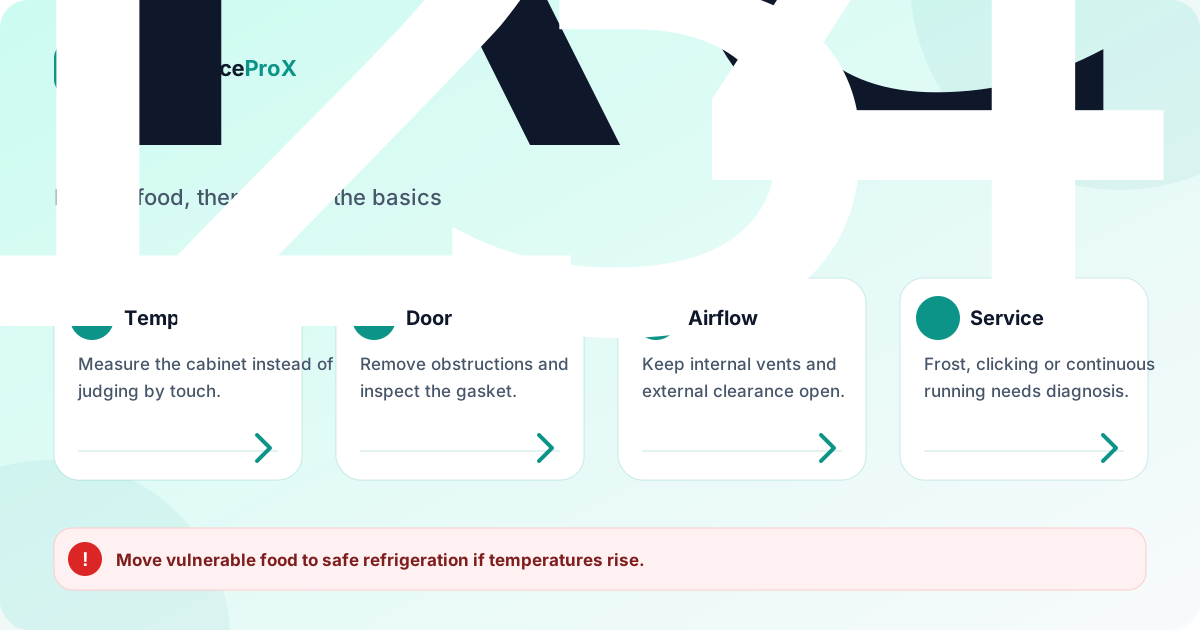
Refrigerator Not Cooling Properly? Checks That Actually Help
A refrigerator that feels warm can spoil food long before a major component stops completely. The problem may be a door left open, blocked internal vent, dirty ventilation area, fan fault, defrost problem, sensor issue or a sealed-system failure. Start by protecting perishable food and observing both the fresh-food and freezer sections. Do not turn controls to their coldest position repeatedly or chip away ice. A refrigerator needs time to stabilise after loading, cleaning, transport or a long power cut, but persistent warming requires diagnosis.
Key takeaways
- Protect perishable food before spending time troubleshooting.
- Check doors, airflow, loading and ventilation without opening sealed areas.
- Compressor, refrigerant and electrical diagnosis requires trained service.
Confirm the temperature problem safely
Use a clean appliance thermometer if available rather than judging only by touching a shelf. Compare the reading with the safe-storage guidance for your food and the temperature range in the refrigerator manual. Keep door openings brief while checking. If perishable food has been above a safe temperature for an uncertain period, follow recognised food-safety advice and do not rely on smell alone.
Check whether the freezer is also warm. A cold freezer with a warm fresh-food section often points to restricted air movement, an iced evaporator or a damper problem. If both sections are warm, power, controls, compressor operation or heat rejection may be involved. Record temperatures and times instead of repeatedly changing the control.
Review power, settings and recent events
Confirm that the interior light or display operates, the plug is secure and the circuit has not tripped. A light does not prove that the compressor is running. Check Vacation, Demo or Cooling Off modes and allow the delay described in the manual after restoring power. Do not use an extension cord unless the manufacturer specifically permits a correctly rated one.
A new or recently transported refrigerator may need to stand upright before connection and then cool for several hours. Follow the transport instructions for the exact model. A large quantity of warm food, frequent door opening or a recent defrost can temporarily raise the temperature, but cooling should recover within the manufacturer's stated period.
Improve door sealing and loading
Remove packages that prevent the door closing. Clean the gasket with a method approved by the manufacturer and check for cracks, deformation or sections that do not grip evenly. The paper test can reveal a loose area, but it is not a complete diagnosis because hinge alignment and cabinet level also affect sealing.
Leave space around internal vents and avoid packing food against the rear air channels. Cold air must circulate. Cover liquids and cool cooked food appropriately before storage. Overloading blocks airflow, while a nearly empty freezer may change temperature more quickly during door openings; use containers of water only if the manual and food-safety guidance allow it.
Check ventilation and condenser areas
The refrigerator releases heat through coils at the back, underneath or within the cabinet walls. Maintain the wall clearance in the manual and do not place the appliance beside a strong heat source. Some cabinet surfaces feeling warm can be normal, especially near anti-condensation tubing, but excessive heat together with poor cooling needs attention.
If the model has user-accessible condenser coils, disconnect power and clean them only as directed. Many modern units have enclosed systems that should not be opened. Listen for the condenser fan where fitted; a stalled fan, heavy dust or blocked toe grille can reduce heat rejection. Keep fingers and tools away from moving blades.
Recognise frost, fan and defrost problems
A sheet of frost on the freezer's interior back panel can block the evaporator airflow even when food remains partly frozen. This may result from a door-seal problem, defrost heater, sensor, fuse, timer or control fault. Do not chip the ice or use a hair dryer, boiling water or sharp tool, because liners, wiring and refrigerant tubes can be damaged.
A complete manual defrost may provide temporary cooling if the manufacturer permits it, but recurring frost needs diagnosis. Move food to safe storage, unplug the unit and manage meltwater. Note whether the evaporator or circulating fan is noisy or silent, because fan operation is an important part of distributing cold air.
Know when sealed-system service is likely
A compressor that clicks repeatedly, runs continuously with little cooling, or remains silent despite a cooling demand may indicate an electrical, control or sealed-system issue. Low refrigerant, a restriction or compressor wear cannot be confirmed by touching one pipe. Proper diagnosis uses temperature, pressure, current and leak checks.
Ask for an itemised diagnosis before approving compressor or refrigerant work. A sealed-system repair should address the leak or failed component, use correct evacuation and charging procedures, and document the refrigerant and part. For an older refrigerator, compare the repair cost with efficiency, cabinet condition and warranty.
Frequently asked questions
How long should a refrigerator take to cool after a power cut?
Recovery time depends on model, room temperature, loading and how long power was off. Keep the doors closed and follow the manual; monitor actual food temperature rather than guessing.
Why is the freezer cold but the refrigerator warm?
Blocked vents, evaporator icing, a failed circulation fan or damper problem can prevent cold air reaching the fresh-food compartment.
Should I turn the control to maximum cold?
Use the recommended setting and allow time to stabilise. The coldest setting cannot correct failed airflow, a bad seal or a sealed-system fault and may worsen freezing in some areas.
Can I refill refrigerator gas myself?
No. Refrigerant handling, leak repair, evacuation and charging require specialised equipment, safe procedures and compliance with applicable rules.